
Improve Manufacturing Productivity Without Increasing Labour Costs
TL;DR
Rising employment costs and skills shortages make the people manufacturers already have more valuable than ever. Productivity comes from removing what stops them being productive: time spent chasing and compiling information, and the production losses that create extra labour hours.
- Skilled people often spend time finding, recording and compiling production information instead of using their experience to act on it.
- Technology shouldn’t replace operators, engineers or managers. Collecting production data automatically lets them focus on why a problem happened and what to do next.
- Overtime often recovers lost production rather than fixing it. Understanding the downtime, overruns and scrap behind it reduces the labour hours needed.

Across the US and UK, employment costs are rising, manufacturing skills are becoming harder to find and the pressure to improve manufacturing productivity is growing. That makes the time, skills and experience of the people you already have more valuable than ever.
People have always been one of manufacturing’s most valuable resources.
Right now, they’re becoming one of its most expensive too.
Skilled people are getting harder to replace
Recent US research from Deloitte and The Manufacturing Institute looked specifically at the role of skilled technicians in modern manufacturing.
As factories have become more sophisticated, Deloitte says multiskilled technicians with knowledge across mechanical, electrical and control systems have become crucial to keeping advanced production systems running.
Although these technicians can represent a relatively small part of a manufacturer’s workforce, Deloitte’s US research says they can play an outsized role in maintaining production, supporting new technology, improving quality and enabling productivity.
At the same time, applicant shortages and skills gaps are making those people difficult to secure.
The challenge may look different from one manufacturer to another, but it raises the same question.
If skilled people are difficult to find, what are we asking the ones we’ve already got to spend their time doing?
Finding information? Recording information? Turning information into spreadsheets? Or acting on it?

Rising employment costs are changing the equation
The Make UK and PwC Executive Survey 2026 found that 86% of UK manufacturers surveyed expect employment costs to increase over the next 12 months.
And while manufacturers remain ambitious for growth, those costs are already influencing decisions.
Make UK’s Q3 2026 Manufacturing Outlook reports that manufacturers are holding back on recruitment despite signs of improving demand, with high employment, energy and input costs continuing to weigh on business decisions.
So, there’s a question worth asking.
If employment costs continue to rise while recruitment remains constrained, where does additional capacity come from?
For many manufacturers, the opportunity is already on the factory floor.
It starts with finding the time, capacity and productivity that’s being lost in the production process today.
Your people shouldn't have to chase information
Every production problem needs a response. But finding out that there’s a problem shouldn’t be part of the workload.
When a machine stops, someone needs to know. When a job starts falling behind, someone needs to see it. When performance drops, the people who can do something about it need the information while it still matters.
Without that visibility, valuable time gets lost simply establishing what’s happening.
Operators leave machines to find technicians. Supervisors walk the floor checking progress. Production teams collect figures and build reports. Planners piece together the latest information before deciding what needs to happen next.
These aren’t necessarily big tasks.
That’s what makes them easy to overlook.
But a few minutes here and there, repeated across machines, shifts and working weeks, quickly adds up.
And there’s a bigger cost than the hours themselves.
Every minute spent finding, collecting and compiling information is a minute your people aren’t using their knowledge and experience to improve production.
KAM Plastics in Michigan experienced exactly this. Before introducing Intouch, operators had to leave their machines to find a technician or team leader when something went down.
With production information available in real time, the team can now respond immediately. KAM has since reported a 10% increase in labour efficiency, with Operations Manager Greg Smith saying he believes Intouch was “a big driver in that.”
Giving people the right information at the right time means they can spend more time solving problems, improving production and putting their skills to better use.
Technology should make skilled people more effective
There’s an important distinction here.
Technology can’t replace the knowledge and experience of a skilled operator, engineer or production manager. Nor should it try to.
The real value of those people isn’t their ability to collect information. It’s knowing what to do with it.
They understand the machines, recognise patterns, solve problems and make decisions that keep production moving. That’s expertise built over time – and it’s difficult to replace.
Technology should help them put that expertise to better use.
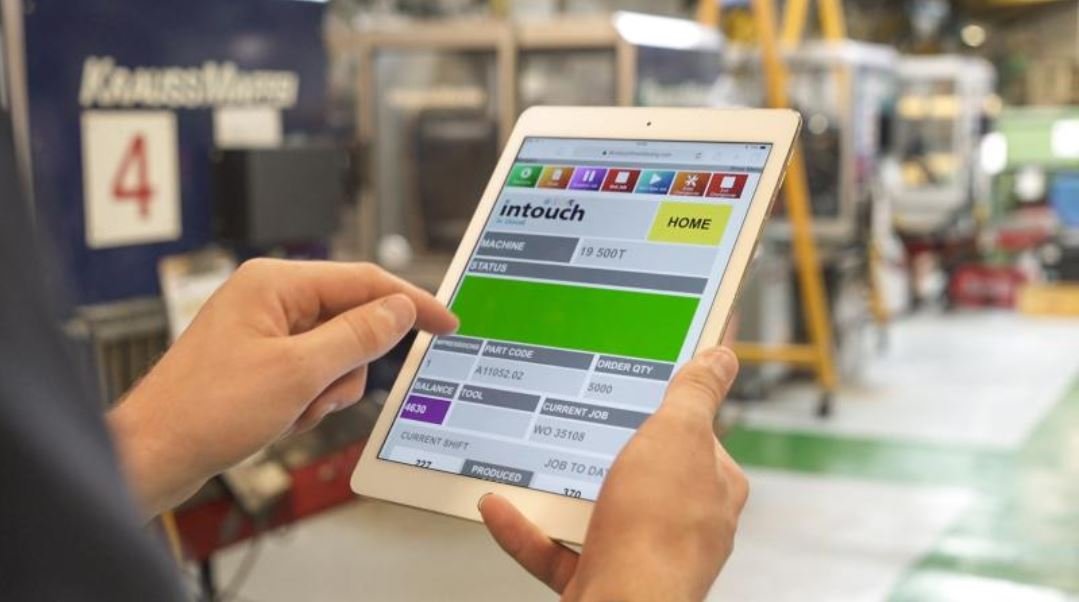
By automatically collecting production data and making it available in real time, we can remove much of the work that happens before a decision can be made.
Instead of spending time establishing what happened, your team can focus on why it happened and what to do next.
That’s where technology earns its place on the factory floor: giving skilled people better information and more opportunity to use their expertise.
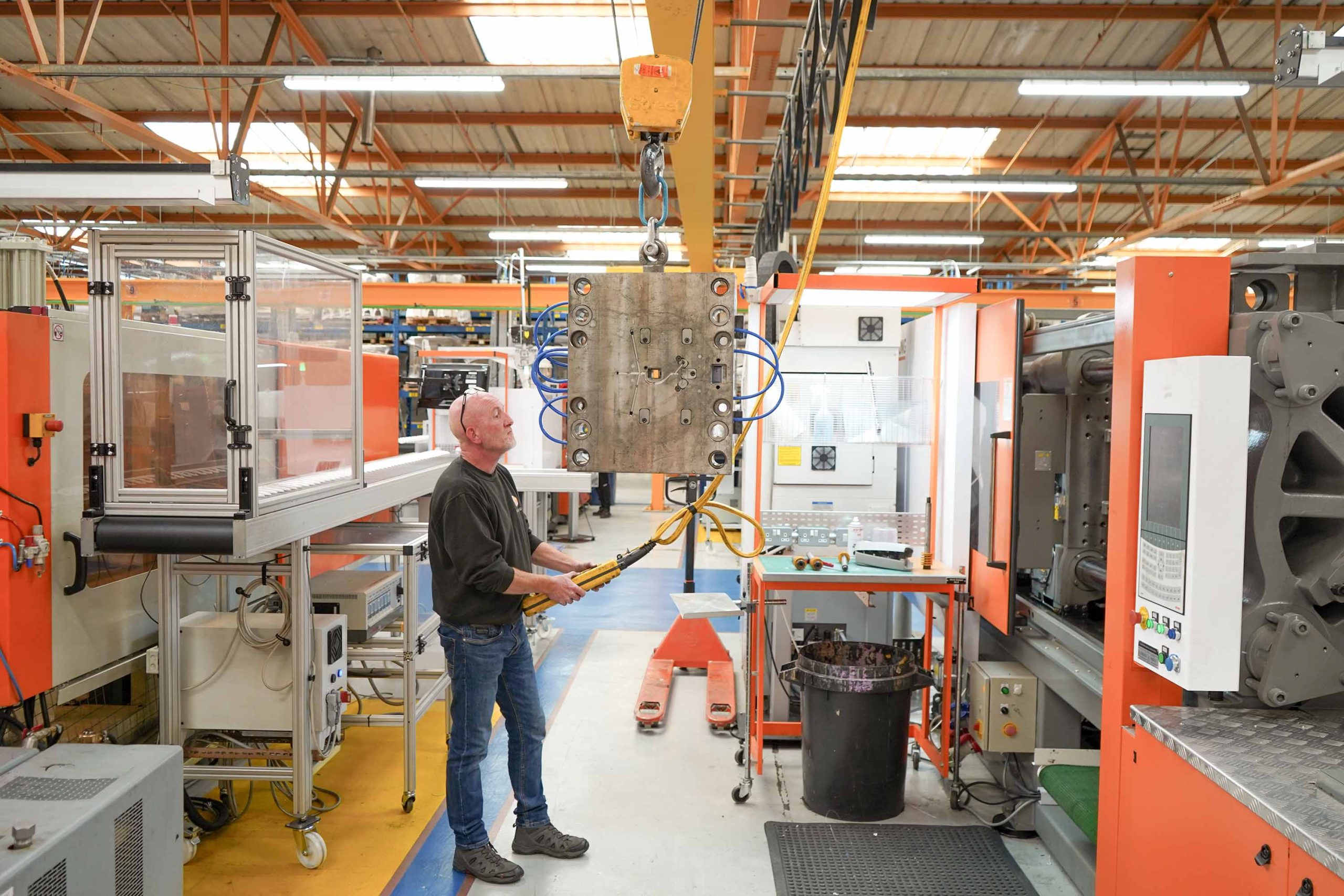
Sometimes the problem isn't labour. It's what creates the labour hours.
Overtime is a good example.
When production falls behind, adding hours can be the quickest way to recover it. But that doesn’t necessarily address why those extra hours were needed in the first place.
A machine may have been down longer than expected. A changeover might have overrun. Scrap could have reduced output, or a job may have been running below its expected cycle rate.
Whatever the cause, the result can be the same: lost production during normal hours has to be recovered through additional ones.
That’s exactly the challenge faced by our customer, Shapers’ Group, a UK injection moulding specialist and one of our most recent Intouch customers.
Before introducing Intouch, Shapers relied on manual reporting to understand downtime, scrap and machine performance. The team could arrive in the morning knowing that a machine had stopped overnight, but without a clear picture of when it stopped, how long it had been idle or what had caused it.
By the time that information had been collected and analysed, the opportunity to respond had already passed, and lost production was contributing to rising overtime costs.
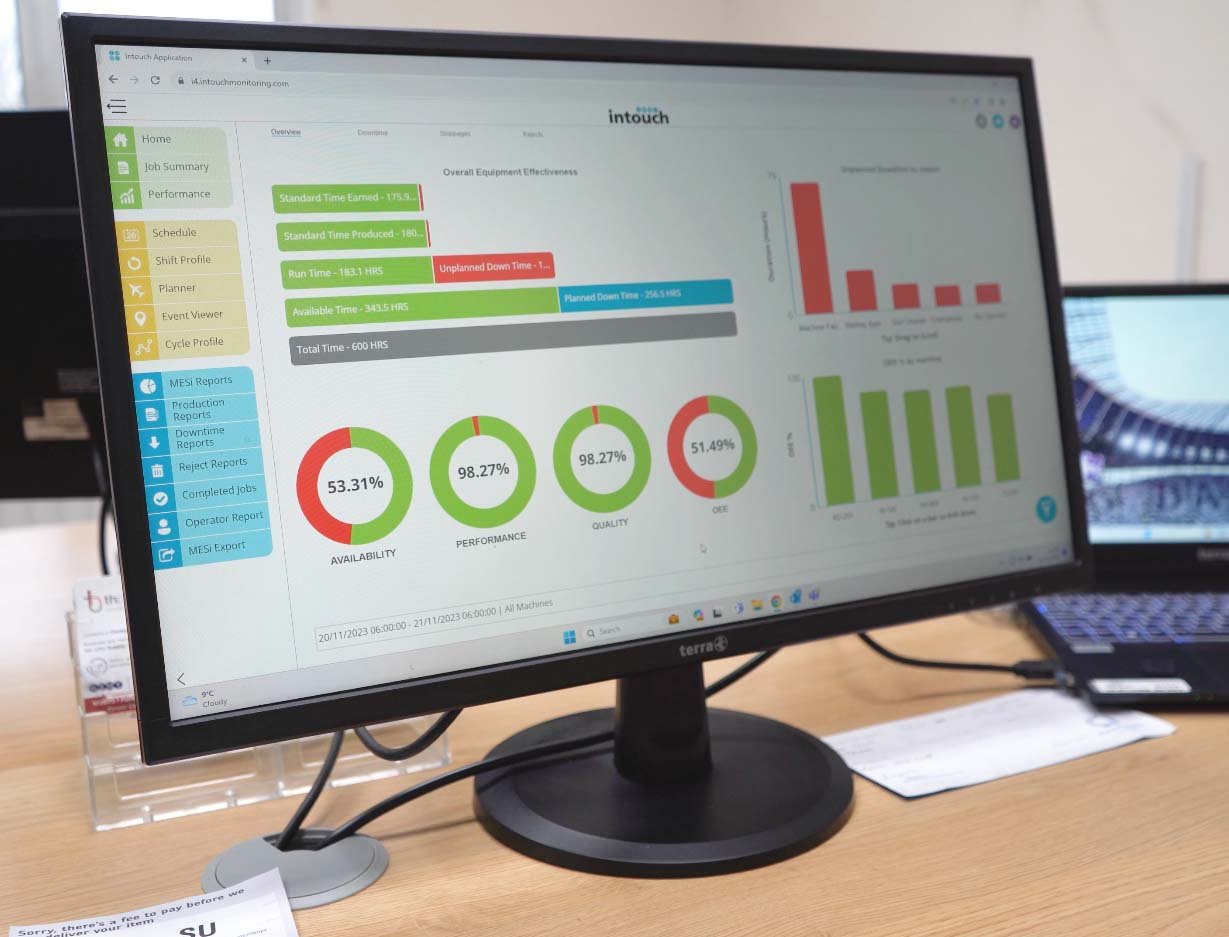
With Intouch providing real-time visibility across production, supervisors could see machine performance, downtime, OEE and scrap as it happened, giving the team the opportunity to identify losses and respond sooner.
The results were significant. Shapers reports that OEE increased from approximately 60% to around 80%.
But for this conversation, there’s another number that matters even more.
Monthly overtime costs fell from approximately £24,000 to £2,000.
That’s around £22,000 less being spent on overtime every month.
Better visibility helped the Shapers team tackle the production losses that were creating those additional labour hours in the first place.
Sometimes the biggest opportunity to reduce labour costs comes from understanding what’s consuming the labour you’ve already got.
Sometimes the biggest opportunity to reduce labour costs is to understand what’s consuming the labour you’ve already got.
Manufacturing productivity starts with making better use of what you already have
Employment costs are rising, skilled manufacturing people are difficult to find and when demand increases, adding more people isn’t always the simplest or most cost-effective way to increase output.
That puts a greater focus on what happens inside the factory today.
- Where is productive time being lost?
- What is creating unnecessary labour hours?
- And how much skilled time is being spent collecting information rather than improving production?
These are questions manufacturers need to be able to answer.
Because productivity is about removing the things that stop good people from being productive in the first place.
That’s where better production visibility makes a difference.
At Intouch, we give your team accurate, real-time production information so they can see losses as they happen, understand what’s driving them and act before those losses become tomorrow’s problem.
Your people already have the experience to improve production. Give them the information to use it.
3 Signs that you are ready to digitise your factory
Are you under pressure to improve efficiencies and reduce down time, which means you’re now looking to implement smart factory technology…
Plastics Manufacturing in a volatile world
The pandemic has highlighted that the need for flexibility and adaptability in manufacturing operations is crucial for navigating…
5 ways you could improve your production efficiency right now
The importance of production efficiency cannot be overstated. It means you are making the most out of your resources – time, materials,…

Have you thought about adopting smart technology?
What's stopping you adopting smart technology in your plant? Are you worried about the costs, the expertise and training needed? What is…
The advantages of a paperless manufacturing operation
So what happens when you switch to a paperless Manufacturing Execution System? You immediately get more predictable manufacturing with more…
Why is planned downtime for maintenance so important?
Often with pressure of delivery deadlines, it is easy for planned maintenance to be pushed down the priority list and only maintain it when…

How to choose the right manufacturing execution system (MES) for you
Selecting the right MES solution will give you the data and insights necessary to optimise your OEE, give you a competitive advantage and…
What would a 1%, 5% or 30% improvement in OEE mean to you?
Are you under pressure to improve efficiencies and reduce down time, which means you’re now looking to implement smart factory technology…

How to transform your plant’s efficiency and profitability with MES
Squeezing everything from your resources without compromising on quality is a challenge increasingly faced by manufacturers. So how can…
How it works
Getting started with Intouch is as easy as 1, 2, 3

1. Book a demo
Let us show you what we can do. Jump on a demo call and our friendly team will take you through the Intouch system and answer any questions you might have.

2. Enjoy a free trial
Don’t just take our word for it! We’ll lend you our technology for a 60-day free trial so you can see exactly how it can benefit the everyday operation of your business.

3. Receive ongoing support
It doesn’t end there. If you decide Intouch is the right production monitoring system for you, we’ll work with you to help you take control and make significant improvements in OEE.