
Do you really need new machines to improve productivity?
TL;DR
Most factories do not need new machines to improve productivity, because output is more often limited by poor visibility than by machine count. Hidden losses such as short stops, overrunning changeovers and slow cycles can equal the output of an extra machine, so improving OEE on existing assets should come first.
- A line running at 72% OEE is missing 28% of its theoretical capacity, which is worth recovering before approving a $300,000 machine.
- Brother UK increased OEE from 74% to 83% after implementing live monitoring, improving productivity without adding any machines.
- New machines are justified when technology limits process capability, maintenance costs are too high, or verified demand exceeds optimised capacity.

In manufacturing, capital investment is often seen as the clearest signal of progress.
When output feels constrained, the instinct is predictable: add capacity. Approve a new machine, expand the footprint or increase headcount.
However, productivity is rarely limited by machine count alone. More often, it is limited by visibility.
If the objective is to improve manufacturing productivity without new machines, the critical question is whether existing assets are being fully utilised. In many factories, hidden losses can actually represent the equivalent output of an additional machine.
The hidden cost of poor visibility
Most production environments appear busy…machines are cycling, operators are engaged and orders are moving. But busyness is not the same as productivity.
Without accurate, real-time visibility, small inefficiencies accumulate across every shift:
- Machine stopping for five minutes, six times per shift
- Changeover that overruns by fifteen minutes
- Higher than usual scrap rate
- Machine operating below optimal cycle time
- Scheduling conflict discovered too late to prevent idle time
Individually, these issues seem manageable. Collectively, they often represent a double-digit loss in effective capacity.
When data is delayed or manually compiled, such losses become normalised. Leadership teams may begin capital investment discussions before fully understanding where performance gaps truly exist.
This is where visibility becomes strategic.
How much capacity is already being lost?
Consider a production line operating at 72% OEE.
This means 28% of its theoretical capacity is not being realised.
Before approving a $300,000 capital purchase, it is worth asking:
- What would a 5-10% improvement in OEE deliver?
- Could that uplift defer investment by 12–24 months?
In many operations, modest OEE improvements across existing assets can deliver the equivalent output of an additional machine, without increasing floor space or fixed costs.
Productivity is a systems issue, not just a hardware decision
It is tempting to view productivity as a hardware constraint. If machines are fully scheduled, additional machines appear to be the logical solution.
Yet effective capacity is shaped by the entire production system.
Losses frequently originate in:
- Reactive scheduling rather than dynamic planning
- Delayed feedback between shifts
- Manual downtime reporting
- Inconsistent maintenance response
- Limited operator-level performance transparency
If these structural issues remain unresolved, new equipment simply increases the scale of inefficiency.
Improving factory efficiency begins with accurate, shared data across production, planning and management. Without that foundation, capital investment risks addressing the symptom rather than the cause.
Why improving OEE often delivers stronger returns
From a leadership perspective, improving OEE influences far more than output.
When downtime is visible immediately, response times shorten. When deviations are highlighted in real time, corrective action becomes proactive rather than retrospective.
The result is:
- Higher machine utilisation
- Greater delivery reliability
- Lower cost per unit
- Reduced overtime pressure
In contrast, purchasing additional equipment increases theoretical capacity. It does not automatically strengthen operational control.
Sustainable productivity improvement is driven by data maturity and accountability.
Evidence from manufacturers
The impact of improved visibility is measurable.
Intouch enabled Russell Roof Tiles to delay a significant and costly repair/maintenance job by 5 months through workload pre-planning based on a properly mapped out capacity plan with real-time data.
Brother UK increased OEE from 74% to 83% following implementation of live monitoring, while significantly reducing time spent on scheduling and reporting.
In both cases, productivity improved without additional machines. The difference was clarity and real visibility.
When capital investment is justified
Of course, as businesses grow, new machines are necessary to support expansion. Such as:
- When existing technology limits process capability
- When maintenance costs exceed acceptable thresholds
- When energy efficiency objectives require modernisation
- When verified, data-backed demand exceeds optimised capacity
The key distinction is evidence.
When performance is transparent and trusted, investment decisions are made from a position of strength. Leadership can demonstrate that assets are operating near optimal levels and that additional capacity will generate sustainable return.
Without that evidence, investment becomes reactive.
A more strategic question
Before asking, “Do we need another machine?” consider: What would happen if we removed 10% of hidden losses?
For many factories, that single improvement would:
- Increase output significantly
- Improve margins
- Reduce operational strain
- Strengthen delivery performance
- Defer capital expenditure
Ready to understand your true capacity?
If you are under pressure to increase output or improve margins, start with insight.
Real-time production monitoring provides a clear view of how your factory is performing, shift by shift, machine by machine. It enables informed decisions about whether optimisation will deliver the required gains, or whether new equipment is genuinely necessary.
We offer a 60-day free trial so you can evaluate this approach using your own production data.
Improve first, then invest second.
How intouch can help
Intouch provides real time production monitoring that gives manufacturers the clarity and control they need. Our system is trusted by hundreds of factories across the world. It is simple to install, easy for teams to use and delivers measurable improvements from day one.
You can try Intouch through a free trial with no commitment, followed by a low monthly subscription that keeps costs predictable. It is a proven and practical way to build the data foundation every modern factory needs.
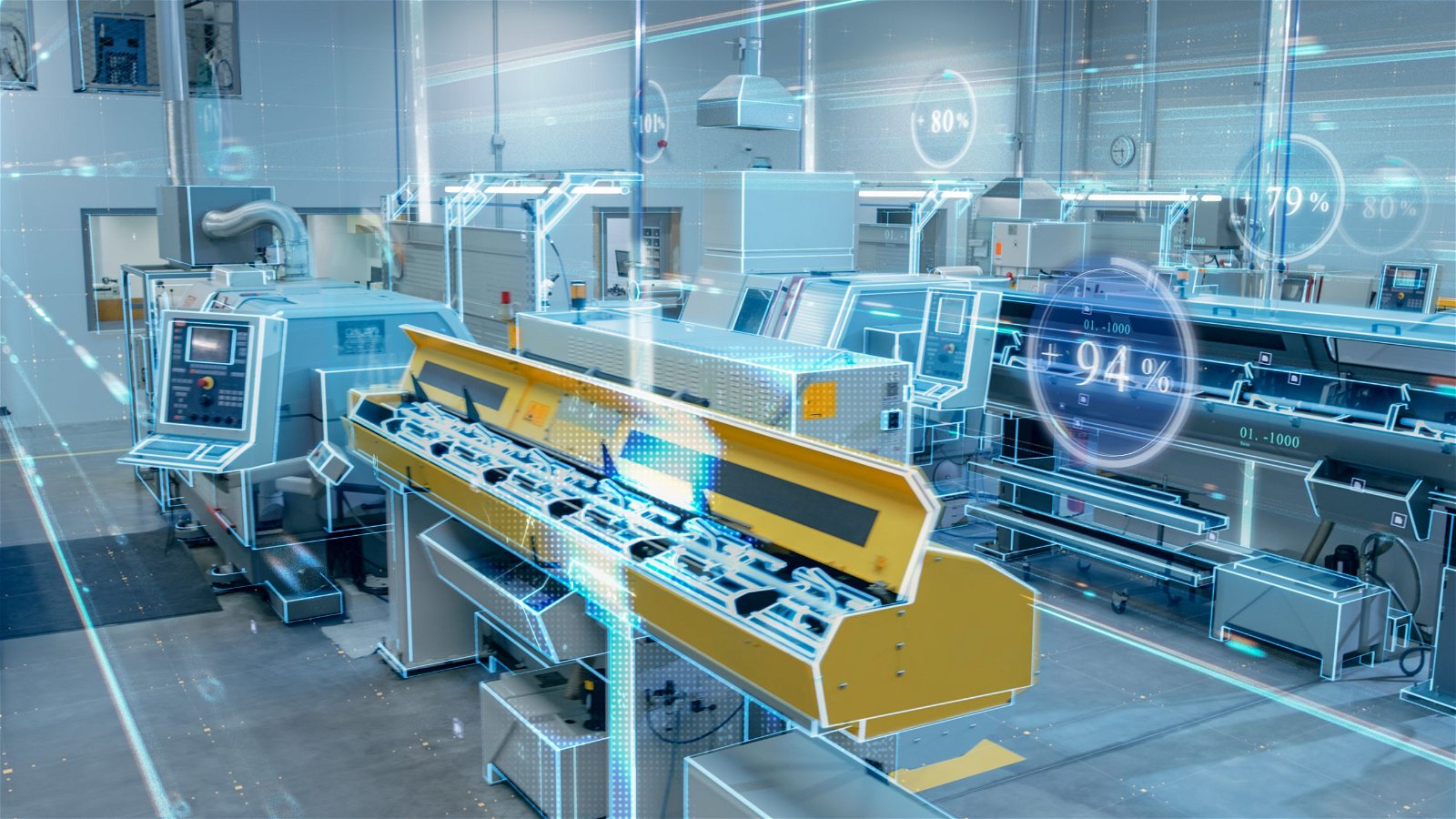
3 Signs that you are ready to digitise your factory
Are you under pressure to improve efficiencies and reduce down time, which means you’re now looking to implement smart factory technology…
Plastics Manufacturing in a volatile world
The pandemic has highlighted that the need for flexibility and adaptability in manufacturing operations is crucial for navigating…
5 ways you could improve your production efficiency right now
The importance of production efficiency cannot be overstated. It means you are making the most out of your resources – time, materials,…

Have you thought about adopting smart technology?
What's stopping you adopting smart technology in your plant? Are you worried about the costs, the expertise and training needed? What is…
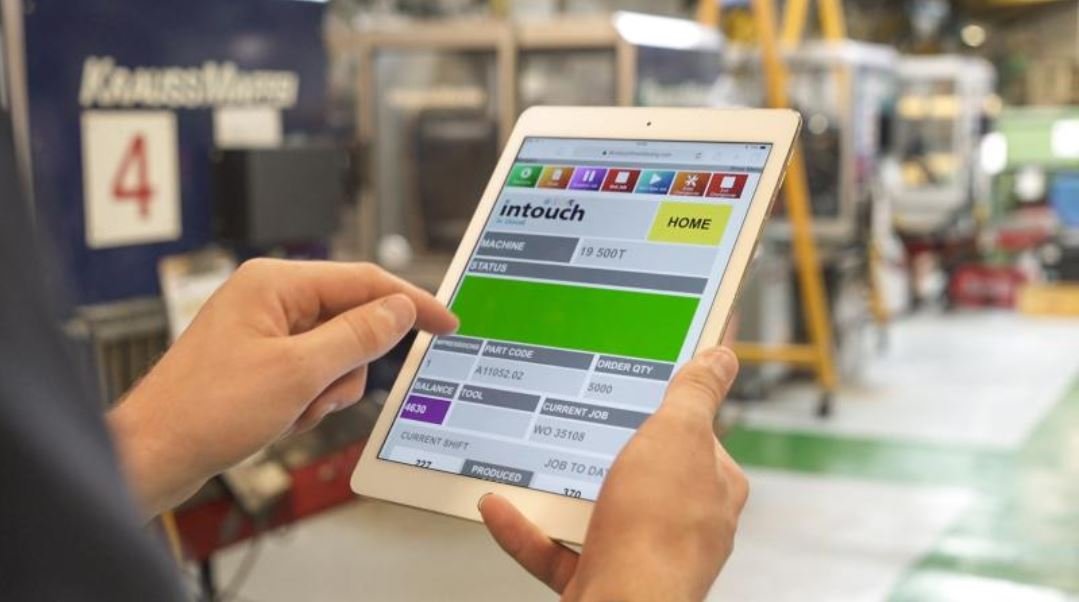
The advantages of a paperless manufacturing operation
So what happens when you switch to a paperless Manufacturing Execution System? You immediately get more predictable manufacturing with more…
Why is planned downtime for maintenance so important?
Often with pressure of delivery deadlines, it is easy for planned maintenance to be pushed down the priority list and only maintain it when…
How to choose the right manufacturing execution system (MES) for you
Selecting the right MES solution will give you the data and insights necessary to optimise your OEE, give you a competitive advantage and…
What would a 1%, 5% or 30% improvement in OEE mean to you?
Are you under pressure to improve efficiencies and reduce down time, which means you’re now looking to implement smart factory technology…

How to transform your plant’s efficiency and profitability with MES
Squeezing everything from your resources without compromising on quality is a challenge increasingly faced by manufacturers. So how can…
How it works
Getting started with Intouch is as easy as 1, 2, 3

1. Book a demo
Let us show you what we can do. Jump on a demo call and our friendly team will take you through the Intouch system and answer any questions you might have.

2. Enjoy a free trial
Don’t just take our word for it! We’ll lend you our technology for a 60-day free trial so you can see exactly how it can benefit the everyday operation of your business.

3. Receive ongoing support
It doesn’t end there. If you decide Intouch is the right production monitoring system for you, we’ll work with you to help you take control and make significant improvements in OEE.